5 Essential Reason Elite Agents Use a Pre-Listing Disclosure Package
Ask any luxury listing agent or top-producing team leader in California how they consistently close deals without friction, and they’ll likely give you a polished answer about “relationship marketing” or “hyper-local market data.”
But behind closed doors? Their biggest competitive advantage isn’t how they generate leads—it’s how they bulletproof their files before the property ever hits the MLS.
While average agents scramble to order NHD reports and badger their sellers to fill out a Transfer Disclosure Statement (TDS) after an offer is accepted, the elite top 5% have a different playbook: The Pre-Listing Disclosure Package.
With the massive wave of recent California Association of Realtors (C.A.R.) form updates, revisions, and outright retirements hitting the industry, executing this strategy perfectly has never been more critical—or more complex.
The Core Strategy: Flipping the Leverage in Escrow
The standard California Residential Purchase Agreement (RPA) gives buyers a default timeline to review disclosures and back out with their earnest money intact. When you hand a buyer a stack of unread disclosures during escrow, you are actively handing them a loaded cancellation gun.
By contrast, compiling a comprehensive pre-listing disclosure package alters the transaction dynamic completely:
- It Eliminates Retaliatory Re-negotiations: When a buyer reviews the TDS, SPQ, and local ordinance compliance documents before writing an offer, those known defects are legally baked into their initial price. They cannot use a sticky window or an old roof patch to demand a $15,000 price drop on day 12 of escrow.
- It Forces Non-Contingent Offers: In competitive markets, providing an upfront, broker-ready file allows savvy buyers to comfortably waive their investigation contingencies, turning soft interest into ironclad, fast-closing contracts.
- It Establishes Ultimate Authority: Walking a seller through their mandatory legal obligations weeks before going live demonstrates a level of fiduciary care that commands a full commission.
Inside the Vault: Elite Form Secrets for the Current Market
Navigating a changing regulatory landscape requires absolute precision. Top producers aren’t just filling out forms; they understand how recent C.A.R. structural shifts change their liability profile.
🤫 Secret 1: The Death of the Wild-West “Addendum” (Using proper form hierarchy)
For years, average agents used standard, generic addenda to patch together disclosure structural changes. Elite agents know that C.A.R. has hyper-specialized its forms to isolate specific liabilities. If your pre-listing package doesn’t match the exact, updated version of specialized disclosures required for property types—especially regarding fire hardening, local rent controls, or regional structural mandates—you are leaving a massive backdoor open for a buyer’s attorney post-closing.
🤫 Secret 2: Pre-Emptive Natural Hazard & Material Fact Synchronization
A massive mistake that costs agents thousands is a mismatch between the Seller Property Questionnaire (SPQ) and the third-party Natural Hazard Disclosure (NHD) report. Top producers order the NHD before the seller touches the SPQ. Why? Because if the NHD flags the property as being in a high fire severity zone or an earthquake fault zone, and the seller checks “No” on the corresponding SPQ question out of forgetfulness, you have a material misrepresentation on your hands. Synchronizing these documents pre-listing eliminates human error.

Anatomy of a Flawless Pre-Listing Disclosure Package
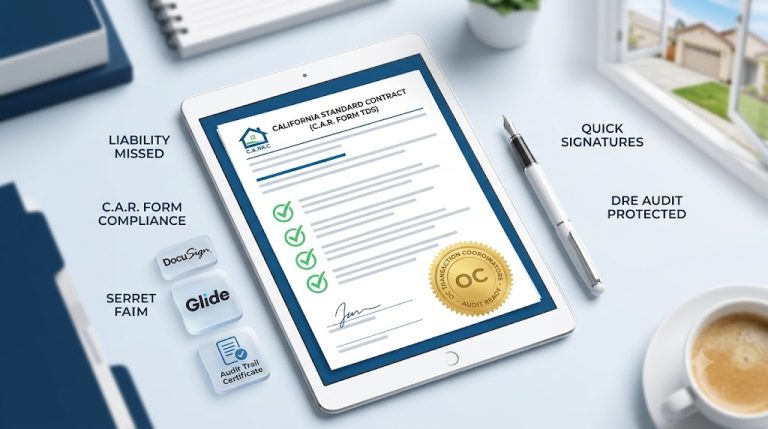
A truly elite upfront file isn’t just a TDS and an SPQ tossed into a DocuSign envelope. A pristine package includes:
- Fully Executed Statutory Disclosures: Completed TDS and SPQ with no blank spaces or skipped questions.
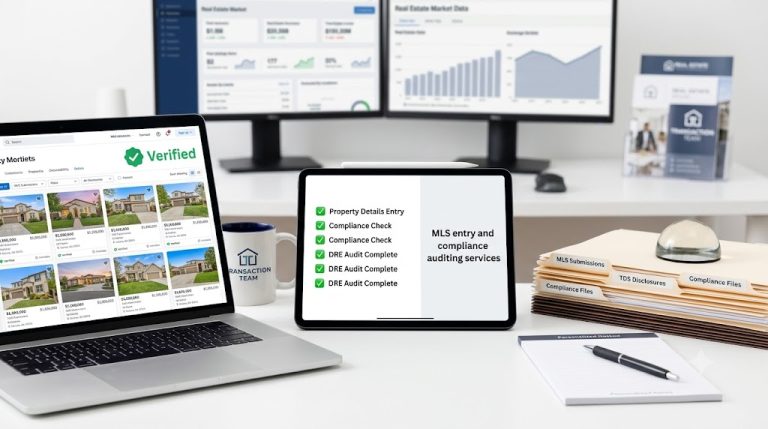
- Upfront Third-Party Reports: Pre-ordered NHD, preliminary title report, and optional pre-inspection reports.
- Hyper-Local & HOA Addenda: Fully completed HOA document stacks (if applicable) and specific city/county mandatory point-of-sale disclosures.
- The C.A.R. Form Compliance Matrix: Ensuring every single form utilized reflects the absolute latest active revision legal verbiage.
The Execution Paradox: Why Top Producers Don’t Do This Alone
The strategy sounds flawless because it is. But here is the harsh reality: the administrative overhead required to pull this off flawlessly will break an agent operating as a solo practitioner.
Trying to track down local municipal checklists, audit seller inputs for compliance errors, monitor the continuous release and retirement of C.A.R. forms, and manage layout signatures—all while trying to prospect, negotiate, and stage a home—is a recipe for administrative burnout.
This is exactly why the highest-producing agents in the state don’t touch this paperwork themselves. They lean on an elite Transaction Coordination Service.
An expert Transaction Coordinator acts as your transaction’s architectural anchor. They ensure your pre-listing packages are assembled with glass-box compliance, verify that your sellers navigate complex forms accurately, and guarantee your files are broker-ready before day one on the market.
If you want to scale your real estate production, protect your clients from post-escrow liability, and win more listings, it’s time to stop chasing paperwork and start leveraging a professional operational backbone.
Want to deploy bulletproof pre-listing disclosure packages on your next listing? Partner with OC Transaction Coordinators to deliver elite administrative precision and ironclad compliance to your business.